






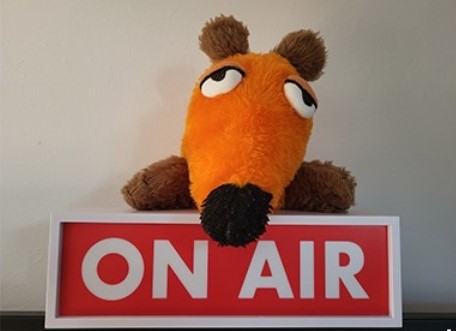
Zum Staunen, Fragen, Ausprobieren und Entdecken sucht das Maus-Team engagierte Veranstalter, die am 3. Oktober ihre Türen öffnen und Einblicke ermöglichen. Dass die Veranstalter mindestens genauso viel Freude daran haben wie die Kinder, zeigt der Blick auf das vergangene Jahr: Bundesweit öffneten sich unter dem Motto „Spielzeit“ an über 850 Orten Türen – so viele wie noch nie.
Ab dem 7. März 2026 können alle Interessierten dem bundesweiten Aufruf folgen und sich für die Mitmachaktion bewerben. Alle Informationen und das Bewerbungsformular finden sich unter: www.wdrmaus.de/extras/tueren_auf/
VERON-Contest 14. März 2026 70-cm-DATV-Kontakt DL4FBN-DL5BCA: 360,6 km
dto. Top-DX 15. März 70-cm-DATV-Kontakt PA3BYV-F5RZC: 435,2 km
Liste: https://batc.org.uk/contests/
ARISS radio contact between OR4ISS and IK1SLD on March 19, 2026
Astronaut Sophie Adenot, amateur radio call sign KJ5LTN, will operate the amateur radio equipment aboard the International Space Station. Sophie will answer questions from students in United States during this live amateur radio contact. The ARISS telebridge ground station IK1SLD in Italy is conducting this radio contact for Lewis Center for Educational Research in Apple Valley, CA.
This live radio amateur contact is scheduled for Thursday March 19, 2026 at 17:15 UTC.
Astronaut Sophie Adenot will operate the amateur radio station call sign OR4ISS aboard the ISS and will call the ARISS telebridge ground station call sign IK1SLD in Italy. This is an ARISS telebridge contact with Lewis Center for Educational Research in Apple Valley, CA, United States. You can listen live to astronaut Sophie Adenot on board the ISS at 145.800 Mhz (plus/minus 3kHz Doppler shift).
The event will be streamed live:
https://youtube.com/live/rT4NiKPTM8s?feature=share
English is the expected language of communication in this amateur radio contact.
Questions (if the time of radio contact allows):
1. What languages do you speak or had to learn to work in the space program?
2. When filming and taking photos, how do the cameras stay safe from sunlight and the elements of space?
3. What were the subjects in school that helped you the most to become an astronaut?
4. Who or what inspired you in your childhood that made you want to become an astronaut?
5. What is one invention you wish was created to make your life easier on the ISS?
6. What specific hardware or software being used on the ISS right now do you think will be the most critical "game-changer" for the Artemis crews heading to the Lunar South Pole?
7. To what extent do you use AI in your missions?
8. What is the scariest alarm that can go off and how do you prepare for it?
9. What do you think will be the most challenging after returning to Earth from space?
10. If we had the economic capability to terraform Mars with current technology, how fast would it happen? Or would it happen at all?
11. What are some of the current experiments you are working on?
12. What is the most beautiful thing you saw in space that a camera can't capture?
13. What is the most interesting fire or storm you were able to see from space?
14. With all the technology stimulation, is it hard to fall asleep on the ISS?
15. What's the most important and the most fun piece of equipment on the ISS?
16. Is there anything that you thought was impossible before going to space but then discovered that it is possible?
17. If we are to live on Mars, we need to grow our own food. Based on the plant experiments currently on the ISS, what is the biggest challenge to cultivating and growing a food source?
18. Knowing that water and fire react differently in space, how do water and fire react together in space?
Spanish: Sabiendo que el agua y el fuego reaccionan de manera diferente en el espacio, c??mo reaccionan el agua y el fuego juntos en el espacio?
19. What happens if a micrometeoroid hits the ISS and makes a hole?
20. How has your perspective of the universe changed since seeing it from space?
21. Will there be any other modules or international partners added to the ISS?
22. Can astronauts get a cold, the flu, or other illnesses on the ISS?
23. From Earth, it's about 250 miles up before reaching microgravity. How far from the Moon would you need to travel to experience zero gravity?
The ARISS program is aimed at students and enthusiasts and aims to inspire them in the study of sciences with this amateur radio activity. The demonstration of amateur radio communication from space invites schools and universities to make use of these educational technical resources. We invite radio amateurs and space enthusiasts to tune in to this exciting moment.
Check out the ARISS website and follow ARISS on the official social media channels for more updates.
https://www.ariss.org/contact-the-iss.html
Der Kalender für weitere europäische ATV-Wettbewerbe im Jahr 2026 sieht wie folgt aus:
März 14/15 -- alles von 70cm ab aufwärts in allen ATV-Modi
April 18/19 -- DATV schmalband 6 m, 2 m und 70 cm
Juni 13/14 -- IARU R1 ATV contest 6 m und darüber in allen Modi
August 15/16 -- DATV schmalband 6 m, 2 m und 70 cm
September 12/13 -- alles ab 70 cm und darüber in allen ATV-Modi
Dezember 12/13 -- alles ab 70 cm und darüber in allen ATV-Modi.
Ultra-Schmalband-DVB-T
Auf meine Anfrage hin, schmalbandige DVB-T-Signale wie 33, 66, 125 oder 250 ks/s über SDR mit GNU-RADIO und einem handelsüblichen RTL-SDR zu empfangen, erhielt ich Unterstützung von Jan Willem, ON6LM, der Erfahrung mit dieser Software hat. Er installierte die verschiedenen Pakete auf einem Linux-PC, und alles funktionierte auf Anhieb einwandfrei. Sobald wir mehr Zeit haben, werden wir damit weitermachen. DVB-T hat zweifellos einige Vor- und Nachteile, aus denen wir etwas lernen können. Jeder „Portsdown“-DATV-Sender (BATC) verfügt über die Fähigkeit, DVB-T mit niedriger Symbolrate zu senden, was bisher weitgehend ungenutzt geblieben ist. Daher mein Bestreben, damit etwas für die ATV-Community zu tun.
Quelle: Frans, ON4VVV, in Belgien
ATV-Journal 204
http://www.kh6htv.com/newsletter
ARISS radio contact between OR4ISS and LX26LV on March 25, 2026
Astronaut Sophie Adenot, amateur radio call sign KJ5LTN, will operate the amateur radio equipment aboard the International Space Station. Sophie will answer questions from students in Luxembourg during this live amateur radio contact. This amateur radio contact is scheduled for Wednesday March 25, 2026 at 15:47 UTC.
Astronaut Sophie Adenot will operate the amateur radio station call sign OR4ISS aboard the ISS and will call the radio amateur ground station call sign LX26LV in Luxembourg. This is a live ARISS radio contact from the Vauban, Ecole et Lyc??e fran??ais de Luxembourg in Luxembourg City, Luxembourg.
You can listen live to astronaut Sophie Adenot aboard the ISS on 145.800 MHz (plus/minus 3kHz Doppler shift).
The event will be streamed live:
https://www.youtube.com/watch?v=zmqfGys2VHE
Frensch is the expected language of communication in this amateur radio contact.
Questions (if the time of radio contact allows):
1. Quel message voudriez-vous passer aux jeunes filles qui voudraient devenir spationautes?
2. Comment vous est venue cette passion pour l'espace?
3. Quelle a ??t??, pour vous, la partie la plus difficile de votre entra??nement pour devenir spationaute et pourquoi?
4. Est-ce que cela fait mal quand la fus??e d??colle?
5. Quelle a ??t?? votre premi??re impression en entrant dans la station?
6. Quels sont les effets psychologiques les plus marquants d'un long s??jour dans l'espace, et comment les g??rez-vous au quotidien?
7. Quelles sont les effets les plus surprenants de l'apesanteur sur votre corps et comment vous y pr??parez-vous avant le retour sur Terre?
8. Quelle chose toute simple sur Terre est devenue compliqu??e dans l'espace?
9. Comment se passe une journ??e typique ?? bord de la station?
10. Comment pilotez-vous la station?Comment ??vitez-vous les m??t??orites?
11. Parmi les technologies d??velopp??es pour l'ISS, lesquelles pensez-vous pourraient le plus b??n??ficier ?? la vie sur Terre dans les 10 prochaines ann??es?
12. Pensez-vous que votre profession peut changer avec l'IA?
13. Avez-vous ressenti le sentiment appel?? ?? overview effect ?? en voyant la Terre depuis l'espace?
14. L'ISS est un mod??le de recyclage et d'efficacit?? ??nerg??tique. Quelles le??ons pourrions-nous tirer de ces syst??mes pour am??liorer la gestion sur Terre?
15. Comment se passe la collaboration avec les coll??gues des diff??rents pays?
16. Comment c??l??brez-vous les f??tes ou ??v??nements culturels ?? bord de l'ISS, et comment ces moments renforcent-ils la coh??sion d'??quipage?
17. Comment g??rez-vous l'eau au quotidien?Stockage?Renouvellement?
18. Avez-vous un hobby dans l'espace ou tout simplement quelle est votre activit?? pr??f??r??e dans la station?
19. Si vous deviez concevoir une exp??rience ??ducative simple ?? r??aliser en classe pour illustrer les d??fis de la vie dans l'espace, quelle serait-elle?
20. Quelles comp??tences ou formations pensez-vous que les jeunes devraient privil??gier s'ils veulent participer aux missions lunaires ou martiennes de demain?
The ARISS program is aimed at students and enthusiasts and aims to inspire them in the study of sciences with this amateur radio activity. The demonstration of amateur radio communication from space invites schools and universities to make use of these educational technical resources. We invite radio amateurs and space enthusiasts to tune in to this exciting moment.
Check out the ARISS website and follow ARISS on the official social media channels for more updates.
https://www.ariss.org/contact-the-iss.html
Charterflug bringt internationales Team zur ISS
Nur zwei Jahre vor der geplanten Stilllegung der Internationalen Raumstation soll diese eine Besatzung europäischer Astronauten aufnehmen, die im Rahmen einer gecharterten SpaceX-Crew-Dragon-Mission dorthin gebracht wird. Josef Aschbacher, Generaldirektor der Europäischen Weltraumorganisation (ESA), erklärte bei einer Pressekonferenz am 19. März, dass die ESA den Flug chartere, um den Astronauten der Organisation die Möglichkeit zu geben, vor der Stilllegung und dem Abstieg des Raumfahrzeugs aus der Umlaufbahn im Jahr 2030 Forschungsarbeiten an Bord der ISS durchzuführen. Die Reise der „Provided Institutional Crew“ ist für Anfang 2028 geplant.
Die ESA geht davon aus, internationale Partner in die Mission einzubeziehen, hat jedoch weder potenzielle Partnerländer genannt noch angegeben, wie viele Nicht-ESA-Astronauten dabei sein würden. Sowohl auf der Website der Raumfahrtbehörde der Vereinigten Arabischen Emirate als auch auf der der australischen Raumfahrtbehörde wird berichtet, dass in den letzten Jahren Vereinbarungen mit der Europäischen Weltraumorganisation unterzeichnet wurden, in denen eine vertiefte Zusammenarbeit bei Weltraumforschungsinitiativen zugesagt wurde.
Quelle:
Dave Lee, M7TLB, AR-Newsline