






Schools and youth organizations located within the ARISS Europe service area of IARU Region 1 are invited to submit their applications and educational projects between 1 September and 23 October 2026. Selected contacts will be scheduled and conducted between July and December 2027.
The ARISS program enables students to establish a live amateur radio connection with the ISS and speak directly with an astronaut in orbit. During the approximately ten-minute contact, students have the unique opportunity to ask questions about life and work in space and receive answers directly from aboard the International Space Station. The experience combines space exploration, science, technology, and amateur radio with hands-on educational activities.
ARISS Europe encourages schools of all levels, as well as youth organizations from countries in Europe, Africa and the Middle East within the IARU Region 1 area to participate. Applicants are required to develop and submit an educational project related to space, science, technology, engineering, mathematics, or other STEM-oriented subjects. An experienced ARISS mentor will guide applicants throughout the selection process and assist successful schools in preparing for and conducting their ISS contact.
The selection process will take place in December 2026. ARISS strongly recommends that interested organizations submit their applications as early as possible and avoid waiting until the final days of the application window. Further information, application requirements, supporting documentation and access to the online application form can be found on the ARISS Europe website:
https://www.ariss-eu.org/index.php/school-contacts/announcement
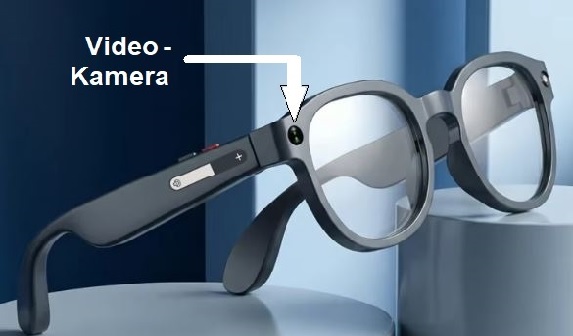
Neuheit: Wenn die Kamera in der Brille eingebaut ist.
Und schon beschäftigen sich die Gerichte damit. Sie heißen „Wayfarer“-Brillen. Das ist der Design-Name der im Retro-Look erscheinenden, schwarzen Zelluloid-Brillen. In den 50er Jahren waren sie gängig. Heutzutage sind die klobigen Dinger „smart“ – neudeutsch gesprochen. In der rechten oberen Ecke ist eine Miniaturkamera für Fotos oder Video in UHD integriert. Rechts gegenüber ist eine Blitz-LED versteckt. Insbesondere sind in den Bügeln Batterie und Datenspeicher für die Aufzeichnung enthalten. Sei noch erwähnt: die Brillenträger können damit auch Musik hören, telefonieren und sich mit Bluetooth verbinden.
Im Fokus der Generalstaatsanwaltschaft Frankfurt steht nun das heimliche Filmen und Fotografieren, ein Verstoß gegen das deutsche, erweiterte Datenschutzgesetz. Es wurden Strafanzeigen gegen die Hersteller der „Smart Glasses“ (Meta, Ray-Ban, Oakley) gestellt, genauso gegen die zahlreichen Distributoren mit den bekannten Ladengeschäften in unseren Städten und mit Internet-Shops. Es ist verboten, Dinge auf den Markt zu bringen, die sich als Alltagsgegenstände tarnen, in Wirklichkeit aber zum Filmen und Abhören geeignet sind. Den Anstoß zur Strafverfolgung gab HateAid, eine Organisation zum Schutz der Menschenrechte in digitalen Netzen.
https://hateaid.org
16.09.2026 Recherchiert von Klaus Welter, DH6MAV