

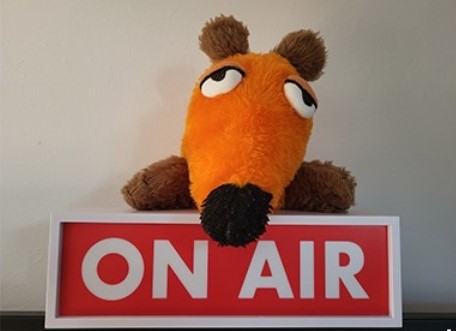
Zum Staunen, Fragen, Ausprobieren und Entdecken sucht das Maus-Team engagierte Veranstalter, die am 3. Oktober ihre Türen öffnen und Einblicke ermöglichen. Dass die Veranstalter mindestens genauso viel Freude daran haben wie die Kinder, zeigt der Blick auf das vergangene Jahr: Bundesweit öffneten sich unter dem Motto „Spielzeit“ an über 850 Orten Türen – so viele wie noch nie.
Ab dem 7. März 2026 können alle Interessierten dem bundesweiten Aufruf folgen und sich für die Mitmachaktion bewerben. Alle Informationen und das Bewerbungsformular finden sich unter: www.wdrmaus.de/extras/tueren_auf/
VERON-Contest 14. März 2026 70-cm-DATV-Kontakt DL4FBN-DL5BCA: 360,6 km
dto. Top-DX 15. März 70-cm-DATV-Kontakt PA3BYV-F5RZC: 435,2 km
Quelle: https://dxspot.batc.org.uk/
ARISS radio contact between OR4ISS and IK1SLD on March 19, 2026
Astronaut Sophie Adenot, amateur radio call sign KJ5LTN, will operate the amateur radio equipment aboard the International Space Station. Sophie will answer questions from students in United States during this live amateur radio contact. The ARISS telebridge ground station IK1SLD in Italy is conducting this radio contact for Lewis Center for Educational Research in Apple Valley, CA.
This live radio amateur contact is scheduled for Thursday March 19, 2026 at 17:15 UTC.
Astronaut Sophie Adenot will operate the amateur radio station call sign OR4ISS aboard the ISS and will call the ARISS telebridge ground station call sign IK1SLD in Italy. This is an ARISS telebridge contact with Lewis Center for Educational Research in Apple Valley, CA, United States. You can listen live to astronaut Sophie Adenot on board the ISS at 145.800 Mhz (plus/minus 3kHz Doppler shift).
The event will be streamed live:
https://youtube.com/live/rT4NiKPTM8s?feature=share
English is the expected language of communication in this amateur radio contact.
Questions (if the time of radio contact allows):
1. What languages do you speak or had to learn to work in the space program?
2. When filming and taking photos, how do the cameras stay safe from sunlight and the elements of space?
3. What were the subjects in school that helped you the most to become an astronaut?
4. Who or what inspired you in your childhood that made you want to become an astronaut?
5. What is one invention you wish was created to make your life easier on the ISS?
6. What specific hardware or software being used on the ISS right now do you think will be the most critical "game-changer" for the Artemis crews heading to the Lunar South Pole?
7. To what extent do you use AI in your missions?
8. What is the scariest alarm that can go off and how do you prepare for it?
9. What do you think will be the most challenging after returning to Earth from space?
10. If we had the economic capability to terraform Mars with current technology, how fast would it happen? Or would it happen at all?
11. What are some of the current experiments you are working on?
12. What is the most beautiful thing you saw in space that a camera can't capture?
13. What is the most interesting fire or storm you were able to see from space?
14. With all the technology stimulation, is it hard to fall asleep on the ISS?
15. What's the most important and the most fun piece of equipment on the ISS?
16. Is there anything that you thought was impossible before going to space but then discovered that it is possible?
17. If we are to live on Mars, we need to grow our own food. Based on the plant experiments currently on the ISS, what is the biggest challenge to cultivating and growing a food source?
18. Knowing that water and fire react differently in space, how do water and fire react together in space?
Spanish: Sabiendo que el agua y el fuego reaccionan de manera diferente en el espacio, c??mo reaccionan el agua y el fuego juntos en el espacio?
19. What happens if a micrometeoroid hits the ISS and makes a hole?
20. How has your perspective of the universe changed since seeing it from space?
21. Will there be any other modules or international partners added to the ISS?
22. Can astronauts get a cold, the flu, or other illnesses on the ISS?
23. From Earth, it's about 250 miles up before reaching microgravity. How far from the Moon would you need to travel to experience zero gravity?
The ARISS program is aimed at students and enthusiasts and aims to inspire them in the study of sciences with this amateur radio activity. The demonstration of amateur radio communication from space invites schools and universities to make use of these educational technical resources. We invite radio amateurs and space enthusiasts to tune in to this exciting moment.
Check out the ARISS website and follow ARISS on the official social media channels for more updates.
https://www.ariss.org/contact-the-iss.html